

Moving from California to Belgium: Relocation Guide
Sep 22, 2026

Californians move to Belgium for a variety of reasons. A job offer in Brussels. A partner with family in Flanders. A slow realization that the mortgage on a modest house in San Diego costs more each month than a comfortable life in Ghent.
Whatever brought you to the idea, the gap between wanting the international move and completing it is wider than most people expect. Belgium sits at the center of European logistics and European law, so the paperwork is thorough and the deadlines are real. Get the sequence right, and the move feels manageable. Get it wrong, and you can spend your first month in Europe untangling something that should have been settled back in the States.
Here is what actually happens and in the approximate order you will experience it.
Start with the visa, because everything else waits on it
As a US citizen, you can visit Belgium for up to 90 days in any 180-day period without a visa. Living there is a different matter. Any stay beyond three months requires a national long-stay visa, known as a D visa, filed through the Belgian consulate before you leave the country.
The category you apply under depends on why you are going. Employment applications usually run through a single permit, which bundles work authorization and residence into one file that your Belgian employer initiates at the regional level. Family reunification, studying, and retirement each carry their own checklist. Belgium’s FPS Foreign Affairs puts processing times at three weeks to nine months depending on category, and states plainly that expedited service is not available.
Two details catch Californians off guard. Supporting documents such as birth and marriage certificates generally need an apostille from the California Secretary of State, often followed by a sworn translation. And if you mail in your application rather than appearing in person, your signature has to be notarized. Neither step is hard, but both consume time you will not have if you start late.
Open the visa file at least four to six months before your intended departure date. If the move is a company transfer, your employer’s corporate relocation partner should be coordinating the immigration timeline, alongside the physical move.
What the move actually costs
Cost planning splits into two questions. What does it cost to get there, and what does it cost to live there once you arrive?
On the second question, the news is generally good for Californians. Expatica’s 2026 figures put average rent for a one-bedroom apartment in central Brussels at roughly €1,118 a month, with Antwerp closer to €886. Measured against New York, Brussels comes in around 47 percent cheaper overall and Antwerp around 51 percent. Utilities have climbed hard in recent years and now run between €125 and €300 monthly for most households, while groceries land in the €240 to €400 range for a small family.
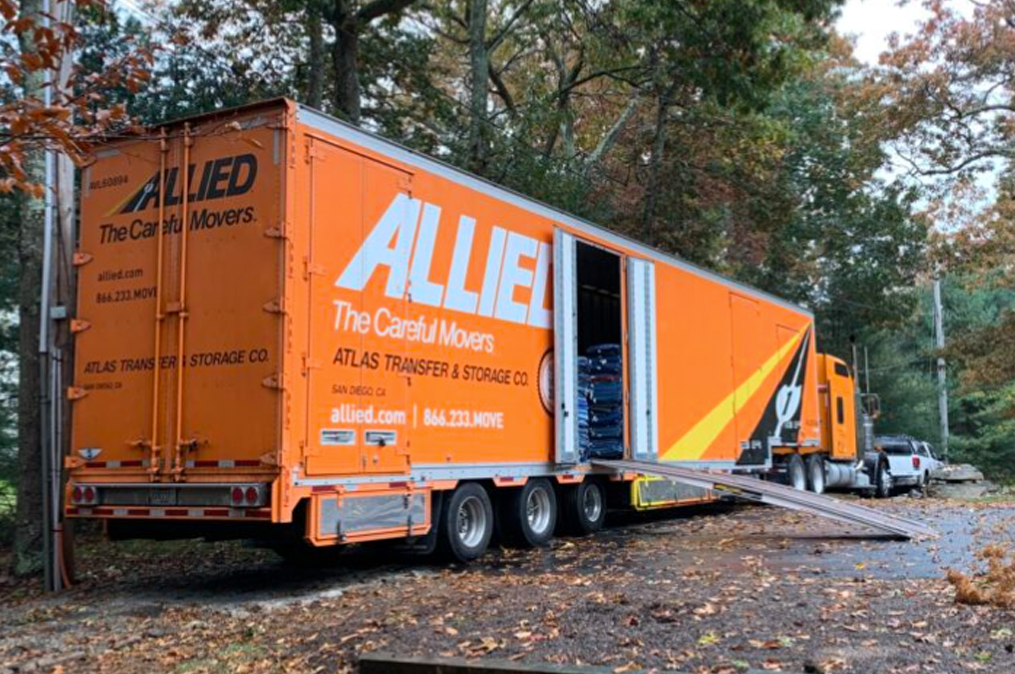
The cost of an international move depends almost entirely on volume and service level. A dedicated container leaving a Southern California port for Antwerp is a very different proposition from a few pallets sharing space with other shipments. Ocean freight is the economical route and generally takes several weeks door to door once you account for loading, sailing, customs clearance, and inland delivery. Many families send a small air shipment of essentials ahead and let the rest travel by sea.
Budget for the quieter line items too, including visa fees, document legalization, sworn translations, temporary housing while you search, and a rental deposit that commonly equals two or three months of rent. A relocation quote built from an actual survey of your home will tell you far more than any online estimator.
Getting your belongings across the Atlantic

Belgium lets you import your personal property duty-free when you transfer your normal residence there from outside the EU. The relief comes with conditions that are worth understanding before you start packing.
According to the Belgian FPS Finance, you must have lived outside the EU customs territory continuously for at least 12 months. Your goods must have been in your possession and in use at your former residence for at least six months before you left. You then have 12 months from establishing residence in Belgium to bring everything in, and for 12 months after import you cannot lend, rent, or sell those goods without notifying customs first.
In practice, this means your paperwork has to be immaculate. A detailed inventory, proof of residence in both countries and a clean declaration are what separate a smooth clearance in Antwerp from a container sitting in a bonded warehouse accruing storage fees. Our comparison of choosing a moving company versus a broker is worth reading before you sign anything, because the difference shows up precisely at moments like customs clearance.
The eight-day rule
This is the step most people moving to Belgium from the USA have never encountered, and it arrives quickly.
Within eight working days of arriving, you must register at the commune, the local municipal administration for your address. You bring your passport, visa, and rental contract to the foreigners’ service, complete the forms, and receive an Annex 15, a temporary document confirming that your registration is underway.
A local police officer then visits to verify that you actually live there. They look for your name on the doorbell and the mailbox. If it is on neither, the check can fail, and a failed check delays everything downstream. Put your name up on the day you move in, and respond immediately to any card left for you.
Once your address is confirmed, you are invited back to finalize your electronic identity card. Most newcomers receive an A card, valid for a year and renewable, with the permanent B card available after five years of legal residence. Communes in and around Brussels frequently have appointment backlogs of several weeks, so book yours the moment you have an address.
Housing works differently than it does back home

Belgian residential leases are traditionally built on a nine-year framework with break points, commonly called a 3-6-9 lease. Shorter contracts of three years or less are widespread and often better suited to newcomers who are not yet sure where they want to settle. Leases must be registered with the tax authorities, normally the landlord’s obligation, which protects you as the tenant.
Deposits are typically placed in a blocked account in your name rather than handed to the landlord, and released when both parties sign off at the end of the tenancy. Expect a detailed inventory of fixtures at move-in and move-out. One warning worth taking seriously: unfurnished in Belgium can mean genuinely unfurnished, occasionally without light fixtures or kitchen appliances.
Healthcare and your driver’s license
Health coverage in Belgium is compulsory and runs through a mutuality, an insurance fund you join once you have registered with your commune and hold a national number. Contributions come out of your salary, and the mutuality reimburses a large share of your medical costs. Many residents add modest supplementary cover for hospital stays. Keep travel medical insurance in place until your file is active.
Driving is more restrictive than most Californians assume. Belgium recognizes licenses from certain non-European countries and permits an exchange without retaking the exam, though each application is assessed individually. In the City of Brussels, you must have been registered in Belgium for at least 185 days, and the process involves police authentication of your license, a fee of roughly €38, and about two months of processing. Request your driving record from the California DMV before you depart.
Taxes do not stop at the border
Belgium taxes residents on worldwide income, with federal rates reaching 50 percent before municipal surcharges. The reformed inbound taxpayer regime, known as BBIK, can soften that considerably if you qualify. It requires a minimum gross annual salary of €70,000 and no Belgian tax residency in the previous 60 months. Employees who qualify can receive up to 35 percent of gross remuneration as a tax-free allowance for five years, with a possible three-year extension.
Meanwhile, the United States continues to tax you as a citizen no matter where you live. You will keep filing a federal return, and you will likely file an FBAR if your foreign accounts together exceed $10,000 at any point in the year. Because Belgian rates run high, most Americans there find the Foreign Tax Credit more useful than the Foreign Earned Income Exclusion. Talk to a cross-border accountant before your first Belgian payday.
Bringing your pet
Pets need an ISO-compliant microchip implanted before the rabies vaccination. Following a primary vaccination, you wait at least 21 days before travel, and some manufacturers specify 30. You will also need an EU health certificate issued by a USDA-accredited veterinarian and endorsed by USDA APHIS within 10 days of your arrival in the EU. Book the veterinary appointments early, because the sequence is unforgiving and cannot be compressed at the last minute.
The barrier to account for
Settling in takes longer than the paperwork suggests, and language is the reason. Belgium is small, dense and multilingual by law. Dutch dominates Flanders, French dominates Wallonia, and Brussels is officially bilingual. The language your commune conducts business in depends entirely on where you live, and that single fact shapes daily life more than newcomers anticipate. It affects school enrollment, municipal paperwork, and how quickly you build a social circle.
The other adjustment is light. A Californian arriving in November meets short grey days and persistent drizzle, and no amount of preparation fully softens that first winter. Most people acclimate by the second one. The compensations are real, starting with a rail network that puts Paris ninety minutes away and a working culture that treats five weeks of annual leave as unremarkable.
A working timeline
Six months out. Confirm your visa category, order vital records and apostilles, and schedule an in-home survey so you have a real number to plan against.
Four months out. Submit the visa application, start the pet vaccination sequence, and decide what ships and what sells.
Two months out. Book the shipment, arrange temporary housing, and request your California driving record.
One month out. Confirm customs documentation and notify utilities and the postal service.
First eight working days after arrival. Register at the commune. Everything else in Belgian life unlocks from that appointment.
Getting the sequence right
Relocating internationally from California is not a single project. It is an immigration file, a customs file, a housing search and an entire household crossing an ocean, all on overlapping deadlines that do not forgive delay.
Atlas Allied has handled international relocations for close to a century, with one coordinator on your file from the first survey through final delivery in Belgium. When you are ready to work from real numbers, request a quote built from your actual inventory.